Tuesday, 2 April 2019

Flatiron Wines, San Francisco


Palace Hotel lounge. Flatiron Wines are outside on the corner.
Flatiron Wines are one of our regular stops in New York. We have found many interesting bottles there so it was with pleasure that we discovered their branch in San Francisco. Perhaps the Californian shop has more shelf space or could it be that Flatiron are even better than before? No matter, there were just more tempting and diverse bottles to fondle and to buy than ever before even if we had to keep a strict eye on what we could take home in hold luggage.

The venerable Palace Hotel San Francisco, rebuilt after the 1906 earthquake.Flatiron are on the far left hand corner.
Flatiron is on a corner of the venerable Palace Hotel, the first grand hotel in San Francisco built in 1875 - the largest hotel in Western United States and tallest building in San Francisco at that time. It was destroyed in the earthquake on April 18th, 1906. None other than Enrico Caruso was one of its guests that night. There are various accounts of how he escaped. One has him standing in the street holding a signed photo of President Theodore Roosevelt demanding special treatment. His own is more credible and is re-produced below.

A great surprise was the number of New York Wines on sale. Bully for Flatiron bringing them to San Francisco.

Among the Californian selection were plenty from the 'Seven Percenters' local producers who make real, not industrial wines. We found a selection of Forlorn Hope and our new craze - Broc Cellars.

We should just mention how helpful and informed the staff is.

Here are our picks.

Broc Cellars Valdiguie. Great label!

Californain Valdiguie used to be confused with Gamay which it resembles.

Broc Mission (Pais). The first grape planted in California

Slotovino readers will know Mission/Pais is none other than Listan Negro

A Californian 100% Pinot Meunier was something we had never seen

California Trousseau - a bit more familiar

We buy Forlorn Hope's Suspiro del Moro Alvarelhao whenever we see it

FH Suspiro was Slotovino best red wine of 2012/13

Our favourite Pinot Gris - Ramato style by FH

Ramato = copper (it) and comes between Orange and Rose.

Forlorn Hope Rorick Heritage Vineyard 'Quessn of the Sierras red. 13.2% and selling for under $20

The grapes are Barbera, Trousseau noir, Tempranillo, Graciano, and Cabernet Sauvignon

Rorick Heritage Vineyard 'Queen of the Sierras' White, 12.8% also under $20.

The grapes are Riesling, Chardonnay, and Verdelho. That man can't make a bad wine!


We can't wait to try this Heitz Grignolino Rose

Heitz Grignolino Rose sometimes sells for more than their Grignolino

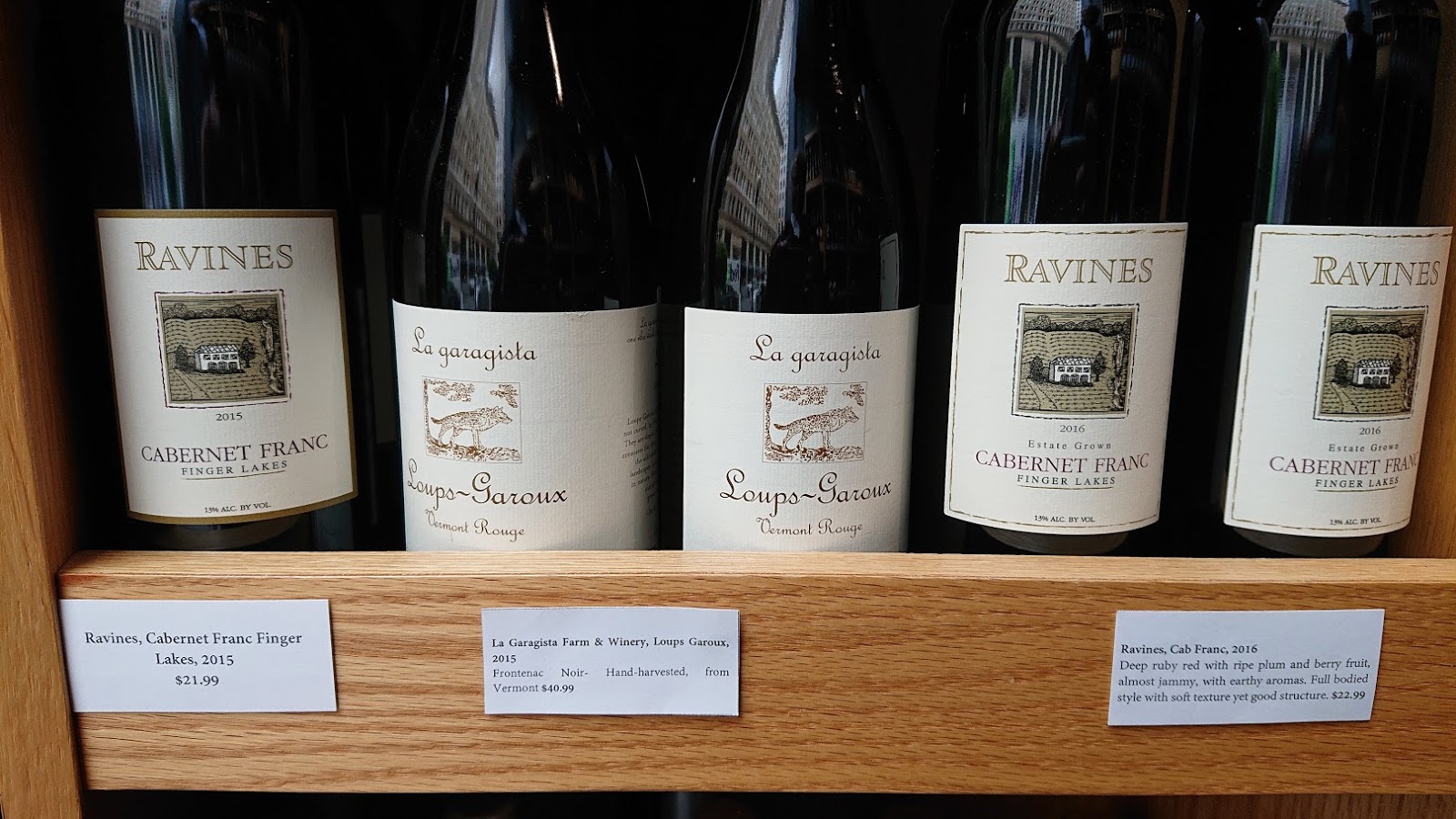
Cabernet Franc from NY and Frontenac Noir from La Garagista, Vermont


also Rieslings from Finger Lakes, New York

Even New York's Channing Daughters' Rosso Fresco blend from Marlot, Blaufrankisch, Syrah, Dornfelder and Cabernet Franc

Amalfi Coast rarity

The famous but expensive Fior d'Uva from Fenile, Ginestra and Ripoli grapes

and a real rarity: Aosta Vuillermin (red). Less than a hectare remains.


Enrico Caruso and the 1906 Earthquake

Enrico Caruso (1873 - 1921) is considered by many music lovers to be the greatest operatic tenor of all time. He was on tour in San Francisco during the Great Earthquake, and appeared in Carmen at the Mission Opera House a few hours before the disaster. Arnold Genthe, the famed photographer, saw Caruso after the world-famous tenor had left the Palace Hotel and walked to the St. Francis Hotel at Union Square.
This somewhat disjointed narrative of Caruso’s experiences in San Francisco appeared in The Sketch, published in London, with drawings by Caruso to illustrate his experiences. The article was reprinted in the July 1906 edition of The Theatre magazine.

You ask me to say what I saw and what I did during the terrible days which witnessed the destruction of San Francisco? Well, there have been many accounts of my so-called adventures published in the American papers, and most of them have not been quite correct. Some of the papers said that I was terribly frightened, that I went half crazy with fear, that I dragged my valise out of the hotel into the square and sat upon it and wept; but all this is untrue. I was frightened, as many others were, but I did not lose my head. I was stopping at the [Palace] Hotel, where many of my fellow-artists were staying, and very comfortable it was. I had a room on the fifth floor, and on Tuesday evening, the night before the great catastrophe, I went to bed feeling very contented. I had sung in “Carmen” that night, and the opera had one with fine eclat. We were all pleased, and, as I said before, I went to bed that night feeling happy and contented. But what an awakening! You must know that I am not a very heavy sleeper—I always wake early, and when I feel restless I get up and go for a walk. So on the Wednesday morning early I wake up about 5 o’clock, feeling my bed rocking as though I am in a ship on the ocean, and for a moment I think I am dreaming that I am crossing the water on my way to my beautiful country. And so I take no notice for the moment, and then, as the rocking continues, I get up and go to the window, raise the shade and look out. And what I see makes me tremble with fear. I see the buildings toppling over, big pieces of masonry falling, and from the street below I hear the cries and screams of men and women and children.
I remain speechless, thinking I am in some dreadful nightmare, and for something like forty seconds I stand there, while the buildings fall and my room still rocks like a boat on the sea. And during that forty seconds I think of forty thousand different things. All that I have ever done in my life passes before me, and I remember trivial things and important things. I think of my first appearance in grand opera, and I feel nervous as to my reception, and again I think I am going through last night’s “Carmen.”
And then I gather my faculties together and call for my valet. He comes rushing in quite cool, and, without any tremor in his voice, says: “It is nothing.” But all the same he advises me to dress quickly and go into the open, lest the hotel fall and crush us to powder. By this time the plaster on the ceiling has fallen in a great shower, covering the bed and the carpet and the furniture, and I, to, begin to think it is time to “get busy.” My valet gives me some clothes; I know not what the garments are but I get into a pair of trousers and into a coat and draw some socks on and my shoes, and every now and again the room trembles, so that I jump and feel very nervous. I do not deny that I feel nervous, for I still think the building will fall to the ground and crush us. And all the time we hear the sound of crashing masonry and the cries of frightened people.
Then we run down the stairs and into the street, and my valet, brave fellow that he is, goes back and bundles all my things into trunks and drags them down six flights of stairs and out into the open one by one. While he is gone for another and another, I watch those that have already arrived, and presently someone comes and tries to take my trunks saying they are his. I say, “no, they are mine”; but he does not go away. Then a soldier comes up to me; I tell him that this man wants to take my trunks, and that I am Caruso, the artist who sang in “Carmen” the night before. He remembers me and makes the man who takes an interest in my baggage “skiddoo” as Americans say.
Then I make my way to Union Square, where I see some of my friends, and one of them tells me he has lost everything except his voice, but he is thankful that he has still got that. And they tell me to come to a house that is still standing; but I say houses are not safe, nothing is safe but the open square, and I prefer to remain in a place where there is no fear of being buried by falling buildings. So I lie down in the square for a little rest, while my valet goes and looks after the luggage, and soon I begin to see the flames and all the city seems to be on fire. All the day I wander about, and I tell my valet we must try and get away, but the soldiers will not let us pass. We can find no vehicle to find our luggage, and this night we are forced to sleep on the hard ground in the open. My limbs ache yet from so rough a bed.
Then my valet succeeds in getting a man with a cart, who says he will take us to the Oakland Ferry for a certain sum, and we agree to his terms. We pile the luggage into the cart and climb in after it, and the man whips up his horse and we start.
We pass terrible scenes on the way: buildings in ruins, and everywhere there seems to be smoke and dust. The driver seems in no hurry, which makes me impatient at times, for I am longing to return to New York, where I know I shall find a ship to take me to my beautiful Italy and my wife and my little boys.
When we arrive at Oakland we find a train there which is just about to start, and the officials are very polite, take charge of my luggage, and tell me go get on board, which I am very glad to do. The trip to New York seems very long and tedious, and I sleep very little, for I can still feel the terrible rocking which made me sick. Even now I can only sleep an hour at a time, for the experience was a terrible one.

Saturday, 2 March 2019

If it ain't Broc, fix it.


We first came across the wines of Broc Cellars at Chambers Street Wines on New York - a recommendation in itself. That was in 2014. Since then, Broc Cellars wines have become quite widely available including in the UK where Robersons are prominent so we are now dealing with a marque of international repute.


Winery on the left, cellar door on the right

However, note the name: Broc Cellars. Yes, there is no estate or vineyard. Grapes are sourced from all over California and vinified at this building in downtown Berkeley. This kind of operation is quite familiar by now with other prominent practitioners such as Birichino making some of the best and most reliable wines in the state.

Image result for Chris Brockway
Chris Brockway
Chris Brockway is the owner and winemaker. We find every aspect of his operation cute as well as admirable including the name which even gives rise to a playful label featuring a badger. His route to Broc Cellars began in Omaha where he was born and took in a Philosophy degree from Nebraska University. There followed a spell making TV promotions in LA and then finally a period studying winemaking and enology at the University of California at Davis and Cal State University at Fresno.


A spell working at a commercial wine producer taught him 'how not to do everything'. He relates how he became an expert in commercial yeasts and additives - none of which are used in his winemaking at Broc Cellars.

He started making small batches of wine for himself and his activity just seems to have grown from there wich is immensely impressive.

 The Broc Cellars website puts their philosophy perfectly:

At Broc Cellars, all of our wines are made using spontaneous fermentation, a process that means we only use native yeasts and bacteria that exist on the grapes in order to make wine. This is unlike many of the wines you will see in grocery stores or on wine shop shelves and in restaurants. We don’t add anything – this includes nutrients, yeast, bacteria, enzymes, tannins or other popular fermentation agents. Sulphur is a naturally occurring element in all wine, the amount found can vary. We add little to no S02, depending on the wine and style.

“Our goal in making wine is to bring out the natural expression of the grape. We decide on a wine by wine basis how we want to do that. We have more freedom now to make the choice not to add Sulphur. There is a bigger market for us to go in the direction we want to go. To counter that we are doing more to insure our vineyards are using the farming practices we support. We’re also committed to detailing exactly what decisions we make during the course of our winemaking process.” – Chris Brockway.

Over the past few years as the natural wine market has evolved we have been working with our partner vineyards on a plan to insure by 2019 over 95% of the grapes that we work with will be grown without using synthetic pesticides, herbicides, fungicides, or fertilizers. The decision to keep sourcing from the 5% of vineyards that have some exposure to these things is complicated and has a lot to do with how much we value the beauty of the fruit, the varieties that come from these vineyards, and the unique challenges of farming the areas where those grapes are grown. We have detailed any exposure in the specific wine’s notes.

So how about the wines? We find them admirable for their diversity and integrity. They belong very much to the new Californian 7 - percenters. No fruit bombs or brooding monsters but a lightness of touch and fidelity to grape variety. These include

Chardonnay

Chenin Blanc


Chenin Blanc

Grenache Gris


Picpoul

The first bottle we opened on arriving home. We couldn't wait to find out what a Californian version of this grape might taste like. Interestingly, Broc's Picpoul tastes more like a hard core natural wine than his others. Liking natural wine as we do, that was no bad thing - just an unexpected one.


Rousanne

Tocai Friulano


Cabernet Franc


Carignan


Counoise

One doesn't fing Counoise as a monocepage in France. When we asked once why not we were told 'on ne s'amuse pas de cette facon.' Ppreviously we had found a Counoise in California by Kenneth Volk. That proved to be pleasantly fleshy with a character of its own and this one was along similar lines. We don't envisage going on a Counoise hunt any time soon but it was nice to be able to taste it again.

Grenache


Lovely colour on this light-touch Lagrein


Lagrein

Soon after our trip to California we found ourselves in Austria where we tried a local Lagrein. By comparison the Broc version seemed to be so much more faithful to the grape's character. As you can see it was light both in colour and in alcohol (12.5%) and we infinitely preferred this style to the heavy over-extracted one.


Mission

Mission is Pais is Criolla is Listan Prieto as everyone knows. Listan Prieto is found in the Canary Islands. As the first European grape to be planted in the New World (in the second half of the 18th century), should one suppose that Listan Prieto vines or cuttings were picked up on the journey only because the Canaries were the last landfall before crossing the ocean? In any case, we are looking forward to Broc's Mission if only to convince us that this is a good variety after all.


Nero d'Avola 

Pinot Noir


Sangiovese


Syrah 

Trousseau


Valdiguie


There is moreof the relatively obscure Valdiguie in California than one might imagine. That seems to be down to people confusing it with Gamay originally. A bit like Carmenere in Chile or Savagnin in Australia.


Zinfandel

As well as this straight Zin, Broc makes a White Zinfandel!

From these varieties they make over 75 different wines. Styles include single variety wines, whites, roses, reds, blends, pet nats and sparkling often from surprising varieties such as Cabernet Franc and even what they call Mockvin - a take on the Macvin of the Jura.

Quantities are very small, often no more than 300 bottles. Alcohol levels are modest and so is the pricing if you buy from the cellar door as we did. By the time Broc wines reach the UK they are rather more expensive of course.


The day of our pilgrimage, there were plenty of other fans of Broc wines tasting and buying. Everything about the operation is cool. We especially like the distinctive labels all by Marta Johansen.

We were really taken by these wines and rate Broc Cellars up there with Forlorn Hope which is saying something.


Sonoma drive-by.


A few years ago we made a memorable visit to Napa. This time it was the turn of the much larger and more diverse region of Sonoma. A dull, cold and rainy day was not very conducive to getting out of the car so we carried out what we call a drive-by, clocking some famous names sich as Mumm and Cline, leaving visits to cellar doors and tastings for another journey.


yes, there is a Napa Street in Sonoma. City Hall is in the background.

the historic Sebastiani Theatre is also in the City Plaza
Instead we stopped at the town of Sonoma itself which was quite impressive even in these circumstances. There is a cute City Hall, the old Sebastiani Theatre and a plethora of estate tasting rooms which are no doubt heaving on weekends. Indeed we saw somewhere that winetasting is second in popularity to whatever activity is first (Basketball?) in the state of California.

Pangloss Cellars tasting room in City Plaza is one of the most prominent

Sbragia is also on the Plaza


No doubt the wines on tasting here were admirable examples of what Sonoma has to offer. For the purposes of this blog however the characteristic grape varieties of CabS S and F, Syrah, Pinot Noir, Chardonnay, Sauvignon Blanc, Petite Sirah, Carignane, Grenache and Co. are not what we are about.


One doorway aptly named 'Passaggio' however drew us into a more diverse world which included wines from Chenin, Grenache Blanc, Roussanne and even Teroldego.


The charming people running 'Passaggio' consist of Cindy Cosco (winemaker) and Frank Romaguera (Tasting room Manager and Wine Club Ambassador) among others.


Cindy is a 'Garageiste' buying in grapes and making all her various wines from her facility without a vineyard. In the case of the Teroldego, she buys from a lady who farms only a very small quantity of this grape.


The wines were all beautifully made, exhibiting varietal flavours. From the whites we thought the Grenache Blanc was particularly fine, having a restrained touch of wood in its background.

sign outside Irish pub in Sonoma

We visit UC Davis Foundation Plant Services


Among the great vine research, propagation and certification institutes throughout the world, the University of California's Foundation Plant Services Facility is one of the most hallowed. Their certification of virus-free plants is the gold standard accepted everywhere without demure.


The university's  sister institution of Viticulture and Enology is where anybody who is anybody studied but the Foundation Plant Services Facility is equally influential athough much smaller and without the public profile of the Viticulture and Enology school.


The long-standing Director of Foundation Plant Services is Dr. Deborah Golino. Dr. Golino was kind enough to give us some of her time and received us very graciously. She explained that she is responsible for many plants in addition to grapes. These include many fruits and nuts. She was particularly proud of the institute's work on Strawberries and indeed the strawberries we were offered at hotel breakfast buffets while in California were exquisite both in looks and in taste.

young vines in pots
Her work in winegrapes consists of developing 100% virus-free material which once certified can be released in the form of cuttings to nurseries who then propagate the vines and sell them in California and worldwide. This process takes many years and is very costly involving thousands of dollars per variety. The institute is not publically funded so relies on commercial and private sources of income.

Nevertheless over the years certification has been completed in the case of 620 varieties of grapes for wine, food, juices, raisins and rootstock. This work takes on enormous significance when you realize that whole countries such as Australia, Israel and others only permit the importation of material certified by the FPS. There are also many South American countries who look to Davis before importing material even if not exclusively.

Compared with the VCR (Vivai Cooperativo Rauscedo) the FPS is small but they stand at the apex of a triangle and it is the vast Californian nurseries that carry out the propagation.


Staff at FPS are only 45 in number. The former ranch which UCD bought in the 1920s amounts to 300 acres of which 100 are devoted to vines. these produce 20 - 30 million plants per year as opposed to Rauscedo's 80 million.


At the moment, Dr. Golino explained, some of their most important research is being carried out into finding a solution for Pierce's disease which is becoming an increasing problem worldwide. We wish Dr. Golino and her staff the greatest possible success in this and the other important work of the FPS.