Saturday, 29 January 2011

Slotovino January clearance tasting


With the help of over 20 friends we tasted the following bottles most of which have already been mentioned in this blog

WHITES

Schloss Proschwitz Elbling 2008, Sachsen. 11.5%
Jan Ulrich Goldriesling Sachsen 2010 11.5%
Colonjes Johanniter Groesbeek, Netherlands, 2008. 11.6%
Chanton Visp Gwäss (Gouais) Valais, 2006 Switzerland. 11.8%
Albòre Spergola. Colli di Scandiano e di Canossa DOC. VFQPRD. 12% (Sparkling)
Dom Diego Azal Vinho Verde, Minho, Portugal. 12.5%
Stitti Mantonico, Calabria 2007. 13%
Teliani Valley
Tsolikouri 2007, Tvishi district of Lechkumi. Georgia, 13%
Sclavus ‘Metageitnion’ Vostilidi, Cephalonia 2009, Greece. 13.2% (Orange)
Bermejo Diego Seco Lanzarote, 2008. 13.3% [= Vigierega/Vijariego]
Marani
Mtsvane NV Kakheti, Georgia 13.5%
Cogno Anas-Cetta
Nascetta, Langhe 2007. 13.5%
Intrepid Ortrugo, Colli Piacentini, Emilia Romagna 2009. 13.5%
Qinta dos Currais Síria Beira Interior, Portugal, 2008. 13.5%
Vin d’autan Ondenc. Gaillac. Robert Plageoles & fils, 2001. 9.8% (Sweet)

REDS

Colares Adega Regional Ramisco Portugal 1992. 11%

Grisard Cuvee Persan, Savoie. 12%
Chateau Changyyu-Castel Cabernet Gernischt 2003, Shandong Province, China. 12%
Tenuta Zagaria Uva di Troia Vigna Grande 2005. Castel del Monte (BA),13%
Terenzuola Vermentino Nero 2009. IGT Toscana. 13.5%
Benanti Nerello Capuccio, Etna. 13.5%
Dominio Dostales Prieto Picudo Vino de la Tierra de Castilla Y Leon 2005. Sp13.5%
Satrapezo Saperavi 2006, Kakheti Georgia 13.5%
Pianetta di Cagnore Vernaccia Nera, Marche 2001. Italy.13.5%
Piovene Porto Godi Tai Rosso, Colli Berici, Veneto. 13.5%
Plageoles: Domaine des tres Cantous 2008, Prunelart, Gaillac. 14%
C’a Bruzzo Tocai Rosso (now Tai Rosso) Vigna Veccia, Colli Berici, Veneto 2008. 14%
Centomoggia Casavecchia Terre dei Principi Castel Campagnano Campania 2006. 14% (corked?)
Ambrusco Palagrello Nero Terre dei Principi Castel Campagnano Campania 2006. 14%
Brecce Rosse Vernaccia Nera, Serrapetrona, 2005. 14%
Vinoplod Vinaria Babić, Sibenik, Croatia NV. 14.3%

The most contentious wines were the Sclavus ‘Metageitnion’ Vostilidi Orange wine, the Chateau Changyyu-Castel Cabernet Gernischt 2003, Shandong Province, China and the C’a Bruzzo Tocai Rosso Vigna Veccia with votes both for and against. The Croatian Babic wasn’t much liked but there were some surprise standouts with the Dutch Colonjes Johanniter leading the way.

Also favoured were the Schloss Proschwitz Elbling, Albòre Spergola, Teliani Valley Tsolikouri, Intrepid Ortrugo and the Vin d’autan Ondenc Gaillac doux by Robert Plageoles in the whites and the Grisard Cuvée Persan, Tenuta Zagaria Uva di Troia, Terenzuola Vermentino Nero, Benanti Nerello Capuccio, Dominio Dostales Prieto Picudo and the Satrapezo Saperavi in the reds.

It was surprising that so many of those present had never heard of most of these varieties and gratifying that they were pleasantly surprised by most of them.

Joining the Slotovino Hall of fame are

Elbling

Johanniter

Ortrugo

Ondenc

Tsolikouri

Casavecchia

Palagrello Nero

Uva di Troia

Vermentino Nero

To which, in honour of the Plageoles family, (see Slotovino Roll Call of Honour) we take the opportunity to add Mauzac in all its 7 manifestations. A productive and fun evening. To be repeated one day. Here is now an updated Slotovino Hall of Fame list.

Whites:

Antao Vaz
Auxerrois
Bombino (Trebbiano d'Abruzzo)
Doradilla
Elbling
Encruzado
Goldriesling
Gringet
Johanniter
Loin de l'Oieul
Loueiro
Mauzac
Ondenc
Ortrugo
Pecorino
Perlé
Spergola
Torbato
Trajadura/Treixadura
Verduzzo
Vilana
Welschriesling (Riesling Italico)
Xarel-Lo

Reds:

Ancelotta
Argaman
Baga
Blauer Wildbacher
Canaiolo
Casavecchia
Cornalin
Folle noire
Francisi
Gascon
Graciano
Grolleau
Gropello
Maglioppo
Marselan
Mencia
Nerello Capuccio
Osoleta
Palagrello Nero
Perricone (aka. Pignatello)
Persan
Piedirosso
Pineau d'Aunis
Plavac Mali
Poulsard
Prieto Picudo
Pugnitello
Ramisco
Romé
Saperavi
Sciacarello
Tinto Cão
Uva di Troia
Vermentino Nero
Vernaccia Nera
Vranec

Friday, 7 January 2011

Report - Christmas and New Year 2010/11

As hinted already in these pages, there were surprises good and bad over the holiday season. This is inevitable if you palm experiments off on guests instead of offering them someting tried and tested. Sorry to say we just like living dangerously. We learned that you have to have several alternatives up your sleeve though and this time, we needed them.

So here's the balance sheet:

Credit

L'Albore Spergola (see Blog entry)
Simonutti Pineau d'Aunis 2008
Biddenden Dornfelder 2009
Tbilvino Khvanchkara 2007
Strohmeier Blauer Wildbacher Lestoa Rot
Strohmeier Blauer Wildbacher Lestoa Rose
Col Sandago Blauer Wildbacher 2005
Margaretenhof Dornfelder 2006
Ch. Haut Chaigneau Lalande de Pomerol 1999
Bean & Beluga White

Debit

C'a Bruzzo, Tocai Rosso 2008
Domaine Grisard Cuvee Persan 2009
Niepoort Palomino
Hatzidakis Voudomato 2008
Strohmeier Rose
Bartucci Bugey Cerdon Sparkling Rose
Grafen Neipperg Schwarzriesling 2009
Bean & Beluga Red

Concerning the successes, the Biddenden Gribble Ridge Dornfelder was outstanding. The first English red we have ever had of which a case would be welcome. The Tbilvino was a semi-sweet blend of two varieties unknown to us: Aleksandrouli and Mujuretuli. This was first brought to our attention by the 24 year old Georgian Verdi baritone Mikheil Kiria who told us that Kvanchkara was the best Georgian wine.

Here he is outside the Louvre (he's the one in the foreground).

We were told it resembled more a luscious New World red than a sweet wine as such and that description was quite right. We drank it as a Vino da Meditazione rather than with food which nonetheless would have been possible.

Blauer Wildbacher was the standout successful variety of the season. Even the Italian version from the Colli Trevigiani was excellent.

The Margaretenhof Rheinhessen Dornfelder was the house wine of the cafe at Dresden Airport

but that didn't prevent it from being delicious. Together with Blauer Wildbacher, Dornfelder really shone in these days.

As you see, we are already strayng into our German trip in the first days of January (of which more later) and here we list a wine which was given to us and not one we had bought in for the obscurty of its grapes. This was the phenominal Chateau Haut Chaigneau -


not only the very best Lalande de Pomerol we have ever tasted but in fact the very first really good one. All previous examples we had ever tasted had been disappointments to the extent that we had quite given up on this rather unloved Appellation. It just goes to show how things have improved in Bordeaux over the years. We believe there are such things as a good Cotes de Bourg or Blaye and even drinkable Boreaux Superieurs and plain Bordeaux!

The White Cuvee we tasted at the Semperoper bar was made by a new Gastronomie in Dresden called "Bean and Beluga" (geddit?) from local white varieties whch were explained to us but which we have forgotten. They may have included Goldriesling. At under 12%, this was excellent. Unfortunately their Red blend was not as successful, containing the first German Cabernet Sauvignon to pass our lips together with Merlot. This was 14% and didn't bode well for German Cabernet Sauvignons for which there is apparently something of a mode.

The other disappointments need some explanation because some of these wines have been highly praised in this blog. The C'a Bruzzo Tocai Rosso and Grisard Persan are both different vintages from those we were so happy to discover and we may not have given these particular wines enough time to breathe or may not even have stored correctly. The Niepoort Palomino definitely tasted oxidised or maybe we should say 'rancio'. We're not sure if that is how this sherry grape is meant to be or if it was just as a result of having been stored too long in our rather warm cellar.

Real disappointment came with the Hatzidakis Voudomato.

They warned us it was sweet but the sweetness of this beverage was such as to make it consumable only by dribbling it over Vanilla icecream. Our 50cl bottle sits on top of the fridge awaiting the odd occasion when it can be used. This may not come for a while! A pity because the vines are not only from the uber-obscure Voudomato variety but are said to be the world's most ancient at 500 years old.

Strohmeier's Rose was their only non-Blauer Wildbacher wine we tasted. It was a perfectly acceptable Schilcher but nothing as interesting as ther Lestoa Rose (made from Blauer Wildbacher).

We have enjoyed Grafen Neipperg's Schwarzriesling (Pinot Meunier) in the past but maybe 2009 was not a great year for this grape or perhaps it needed more bottle age.

Nothing wrong with the Bugey Cerdon Rose - just that we didn't realise it was Demi-Sec which was our fault because we were aware it was 8% alcohol - the same as wines like Moscato frizzante or Asti Spumante. That kind of thing is liable to get you into trouble when guests arrive and you offer them a sweet sparkling wine as an aperitif.

Friday, 31 December 2010

Slotovino Roll Call of Honour

Robert and Bernard Plageoles In 2011 we would like to institute the Slotovino Roll Call of Honour to celebrate those brave souls who are responsible for propagating or rescuing 'heritage' grape varieties in danger of extinction. We have come across a few of these already in our travels and we believe they should be celebrated as much as their wines which we also celebrate in the famous Slotovino Hall of Fame. We love lists at Slotovino so here is our embryonic Roll Call of Honour together with the grapes relevant to each name; Giuseppe Apicella, Alfonso Arpino and Luigi Reale - Tintore Emilio Bulfon - Cividin, Cjanorie, Forgiarin, Moscato Rosa, Picolit Neri, Sciaglin, Ucelut Casali Viticultori - Spergola Francisco Figueiredo and others - Ramisco Jean-Pierre and Philippe Grisard - Persan Walter Massa - reviver of Timorasso and leader of a new wave of winemakers in South East Piemonte Jose Luis Mateo Bastardo, Caíño Redondo, Caiño longo, Zamarrica, Brancellao, Sousón, Arauxa, Dona Blanca and Monstruosa de Monterrei in Galicia Heinrich Mayr for nurturing the white heirloom variety Blaterie at his Nusserhof property near Bolzano, Alto Adige Robert & Bernard Plageoles, 7 types of Mauzac, Ondenc, Prunelart, Verdanel etc. Domenico Pedrini and Gianni Chiste' of Azienda Agricola Pravis, Lasino (near Trento), Negrara and Gropello di Revo back from increasing obscurity in the Trentino area. The Rasse family (Rene and his sons Georges and Denis) for maintaining the idiosyncratic St. Jeannet appelation (near Nice) when almost all other vignerons (there were 70 in the 1950s) have sold their land to developers. It is in this case the Terroir if not the varieties which were endangered although some rare Braquet is grown together with Mourvèdre, Merlot, Cabernet Sauvignon, Syrah, Grenache, Rolle, Ugni Blanc, Chardonnay, Muscat and Grenache Noir and the bizarre and ancient method of aging the reds in 'Bonbonnieres' before putting the wine in oak barrels. The smaller surviving growers include Mimi Lorenzato, Roger Barrière and Lazare Giambi. Agricola San Felice - Pugnitello Luigia Zucchi - Nibio the regeneration of the ancient grape variety, Nibiò, which once held position as Monferrato's noblest and highest value. 200 years of neglect nearly resulted in its extinction, but producer Luigia Zucchi has fronted the campaign for its rebirth. There are no doubt many more and we will add to the list, but this is a start and suggestions will be gratefully received.

Spergola is last entry Slotovino Hall of Fame, 2010


We hail the rare Emilian grape Spergola as our last addition to the Slotovino Hall of Fame in 2010. We were dubious about adding this to our order from Bat and Bottle but it has turned out to have been one of our Christmas stars. At £8.75 for a bottle of Casali's L'Albore Spergola Secco, Vino Frizzante Colli di Scandiano e di Canossa (Reggio Emilia) we have placed an order for multiple bottles and look forward to drinking this appley sparkling wine in the place of any Prosecco or several Champagnes of our acquaintance for some time to come. Restaurants would do well to offer this amazingly good value sparkler instead of some of the boring and disappointing wines we so often find in this sector.

As we owned up some time ago. we were wrong to dismiss sparkling wine out of hand. Together with our discovery of sparkling Cabernet Franc from the Loire by Ackerman (£7.99 from Waitrose) this Spergola is indeed a discovery which we can recommend unreservedly.

NB. We found a pink Cremant de la Loire also made from Cabernet Franc so Ackerman are not exclusive in this felicitous choice of grape for sparkling rose.

Tuesday, 21 December 2010

Paris - a moving feast

Some things change, others not. Quite a blow was the disappearance of our friend Julien in the Rue Charlot. Julien had worked for a number of years for Oddbins, Camden Town and his shop Caviste Julien was a really excellent neighbourhood place where a tremendous variety of wines were to be found. Could it be that Julien's stock was too eclectic? Certainly his successors "Nysa" while maintaining some of his stock seem to be headed in a more conventional direction. Nysa were holding a tasing party for their opening. We were trundling by, laden with shopping when a friendly inebriate on the pavement outside told us 'ne hesitez pas, entrez!' So we did. There was one of Julien's bottles on tasting, a nice Alsace Pinot Blanc (13.5%). We bought it - from what the shopowner said, perhaps the only one sold that evening. Still everyone seemed to be having fun.

This leaves the shop Le Versant Vins in the nearby Marché des Enfants Rouges even more of a beacon of interest in the area.

ALL the wines there are naturel or biologique. We studied the selection more attentively than on previous visits and were even more impressed than before. We bought a jolly Pineau d'Aunis sparkler with a fizzy drinks type cap for closure. We didn't realise this was white or just off-white until opening it but it was not a disappointment. No doubt someone makes a red sparkling Pineau d'Aunis but we recall that quite a lot of this grape goes to make Rosé. We couldn't resist buying a bottle of Simonutti's Pineau d'Aunis and were glad to have it to follow Julien's Alsace Pinot Blancs that evening when we ate a slightly spicy fish stew created by Mrs. Slotovino. Both were excellent accompaniments to this wonderful dish.

In restaurants and bars we had better luck than usual. Brasserie Balzar's Saumur Rouge was so good we forgot to look at the label and the Beaujolais at l'Auberge Pyrenées Cévennes in the Rue de la Folie Méricourt was so good we called from London to find out what it was. It is by Paul Durdilly, a negociant of Southern Beajolais, so the wine is just Beaujolais - not from any of the Villages. Delicious. At the Bar du Theatre opposite the Theatre Hauts de Seine at Puteaux, you are served an equally delicious Touriga Francesa from the Douro if you ask for a 'vin rouge' at the bar. OK, it's a Portuguese Bar but still, it takes some courage to do such a thing in France, especially with a twinkle in the eye from the server.

Our old friend Rupert marched us up the Rue de la Montagne Ste. Genevieve to 'De Vinis Illustribus', an interesting establishment for those interested in old vintages. We had a very informative tutorial from Lionel Michelin who had taken over a famous institution run by Jean-Baptiste Besse until about 4 years ago. We were shown the ancient cellars and some venerable bottles were trotted out so we could see their labels, shoulder levels etc. They even have a small but enticing selection of modern wines including a Hungarian Cabernet Franc we happen to have at home: 'Ikon'. Rupert managed to find something here from the 21st century.

From there it was only a hop, skip and jump (OK the weather was cold) to Les Caves du Pantheon which impressed us even more than on our first visit - the good impression being directly proportional to the greater amount of time we had there. Rupert found another two bottles at this address. We shared the selection of a Bugey sparkling Rosé


which at 8% prOmises to be something out of the ordinary as well as a Carignan Blanc (!)

a Terret Blanc

and a Greek dessert wine made by that most interesting Santorini producer, Hatzidakis from a grape variety called Voudomato. It is claimed that some of the vines on Santorini are 500 years old. This wine (Voudomato)is only 11% and is available from Green and Blue in London. Don't try their Clapham branch though. It closed down sadly not long ago. Things change in London too.

The Caves du Pantheon is a medium-sized shop but one that repays any amount of time. The laconic and amusing person we recognised from before is a mine of interesting information. Our only other port of call was another place we had cased on a previous visit - La Cave des Pupilles in the Rue Daguerre, This was thronged with Christmas shoppers and sterangely enough there was a Greek wine tasting going on including the rarissimo Vostilidi grape we had bought from Caves du Pantheon a year ago. We left them to it and will return another time as we believe there may be some interesting wines here.

Our real reason for going to Paris though was to pick up a consigment of Domaine Grisard's Persan,

a Savoyard wine so rare that it is not even available in Paris. Persan was one of our greatest finds of 2009


so we hope it will not disappoint this time. That would definitely be a move in the wrong direction.

Tuesday, 7 December 2010

Non-Tollerman Argentina

On this visit we became intrigued to find out what the Portenos drink for their everyday wines. Visiting a branch of Carrefour

- the French supermarket chain that is even bigger than Tesco - we clocked the fact that many of the most prominent wineries (such as Michel Torino of our favourite Don David range) also produce wines for the low end of the market. These tasted no better than their prices ( 7 - 11 Pesos or £1 - £2 a bottle) would have led one to expect. The only exception here was Etchard's excellent Torrontes on sale for 11.5 Pesos which was rather good.

Eleswhere there were dodgy brands such as San Felipe's '12 Uvas' which makes the astonishing claim to be the only wine in Argentina to consist of


Cabernet Sauvignon, Cabernet Franc, Merlot, Malbec, Syrah, Bonarda, Sangiovese, Barbera d'Asti (sic), Pinot noir, Tempranillo, Chardonnay, Chenin.

(they might have said the whole world and been pretty sure they were safe in doing so). Apparently these brands have been going for a long time and have their faithful public.

We had also found a 'genuine' Argentinean Chianti,

lots of "Champagnes" also grown in Argentina. We knew about the "Borgognas" and the "Beaujolais" of Bianchi from our previous visit. Surprisingly generic Tinto or Blanco served as restaurant house wines were not as bad as these bottom end supermarket wines so a certain amount of choice is obviously available and some wines are better than others. Interesting to us was the fact that the Cabernet Sauvignons stood up better than the Malbecs, Tempranillos and Syrahs at this end of the market.

Trawling through the better wine shops such as The Winery (a chain) and Ligier,

we found an 11.5% Valle de Uco Sauvignon Blanc at 11.5% by O. Fournier for only 40 Pesos (£6.66)

which was as refreshing as any wine could be. O. Fournier is of course one of the greatest producers in Argentina but they refuse to send their wines to 'Vinas, Bodegas & Vinos de Argentina' for some reason which is obviously a crippling blow to this publication. It is a pity that we didn't find any other good guide to Argentinean wine while we were there.

The Winery is a pleasant chain with knowledgeable staff, a welcoming seating area and surprisingly high standard of shopfitting which one encounters everywhere in this cash-strapped country.They have the usual range and were not able to think of much when asked about any rarities or out of the ordinary stuff. Strange because we found this sparkling Bonarda from Alma 4 which looked interesting given that we had not encounteresd such a thing elsewhere.


At the airport we bought a bottle of Rutini’s ‘Trumpeter’ Mendoza Petit Verdot, a Bodegas Bianchi Nebbiolo and a Corte Friulano ‘Gran Lurton’ which is actually a blend of Sauvignon Vert, Pinot Gris, Chardonnay and Torrontes). There was also a bottle of Yacochuya red bearing the signature of Michel Rolland but no sign of alcohol content. We looked in vain for Cruzat Larrain.

Tollerman says this is the benchmark of Argentinean Espumante. According to Winesearcher Pro, this is not yet available outside Argentina. The winery itself seems only to have been established in 2004. A pity the airport doedn't recognise this yet.

Well, another reason to return to Argentina - in case we needed one.

Friday, 3 December 2010

Tollerman of Argentina

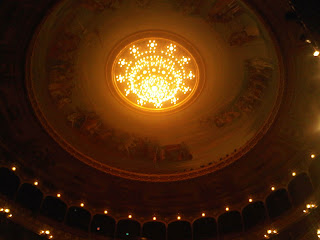
On the inside of the cupola of the Teatro Colon Buenos Aires (one of the 5 world’s greatest opera houses) is a pantheon of composers’ names not visible in the photo above but trust us, they are there):

Gluck

Haydn

Mozart

Cherubini

Meyerbeer

Rossini

Bellini

Donizetti

Schumann

Chopin

Verdi

Berlioz

Bizet

Wagner

Gounod

As with all such lists it is amusing for future generations to see who has endured and who has been omitted. If Gluck, why not Handel?, if Schumann, why not Schubert? If Chopin why not Liszt?. Where are Bach, Beethoven, Weber, Brahms? The Russians (Tchaikovsky, Mussorgsky, Rimsky) are entirely absent.

With wine, it seems tastes change even more rapidly. On our recent return trip to Argentina we learned that as little as 10 years ago no one was interested in Malbec. Now it has become the Argentinean signature grape with a vengeance. Not only that but it has become synonymous with Mendoza, so as we know diversity has gone out of the window with interest seemingly restricted to comparing one Malbec from Mendoza with a great many others, all more or less in the same rather assertive style.

Winemakers and consumers alike might spare a thought for one name on the ceiling of their newly restored opera house – Meyerbeer. At the time when Wagner was a struggling young composer in Paris, Meyerbeer ruled the operatic world.

In a country where the second most planted red grape, the rather interesting Douce Noire (aka. Bonarda) is called the “Ugly Duckling,” where consumers are notoriously conservative and brand–orientated and apparently uninterested in diversity there seems at present little hope for much change until Malbec goes the way of Meyerbeer. Meanwhile there may be other varieties waiting in the wings. For example, take the case of Béquignol, a fascinating import from Bordeaux and South-West France which accounts for 0.94 of Red Wine production. This means that there are no less than 2,256 acres of Béquignol grown in Argentina which is more than Barbera (1,828), Torrontés Mendocino (as opposed to the more familiar Torrontes Riojano - 1,643), Riesling (271) and Viognier (1,848) according to the website www.winesofargentina.org.

No one in any of the wineshops we visited had ever heard of Béquignol, so we made contact with Nigel Tollerman who according to our research is a mainstay of the Argentinean wine scene in Buenos Aires. Starting at Sommelier School in Argentina before he had learned Spanish he has set up in his own business (0800-VINO)


and was (perhaps still is) the only wine merchant in Buenos Aires to have a temperature-controlled cellar. As he says, most of his competitors don’t know much about wine. We ourselves discovered some of them still think Bonarda is an Italian grape and Torrontes a Spanish one (Bonarda is French - Savoyard - and Torrontes is a native cross between Mission or Criolla Chica and Muscat of Alexandria and has nothing to do with the Torrontes of Galicia).

Nigel informed us that various wineries grow all kinds of experimental varieties but either sell the resulting bottles only at the cellar door, use them in blends or do not sell them at all. He added that the Argentinean consumer is very conservative and very brand-orientated. He was seemingly happy to tutor us in all aspects of Argentinean wine.


Nigel is fantastically hardworking and has already built his business up to a commanding position, it seems. He spends two or three months in the UK every year and travels extensively throughout Argentina seeking out interesting wines from small producers. He was intriguing on the subject of Natural Wines saying because of the excellent dry growing conditions, often accompanied by healthy winds, Argentinean vines did not need much spraying and many vineyards were biological without even bothering to become so officially. On the subject of sulphur, he said that all wine contained naturally occurring sulphurs so even unsulphurated wines were not free of them.

Coming from the Sommelier side of the business, Nigel knew how to get the best out of us and at the same time give us his best. Asking us what we wanted to spend and what our interests were, we walked off with the following bottles – twice as many as intended but quite a bit cheaper than we had expected. He accomplished all of this while dealing with other customers on the telephone, beautifully and painstakingly wrapping our bottles first in tissue paper and then, unbidden in bubble wrap - even putting his seal on top
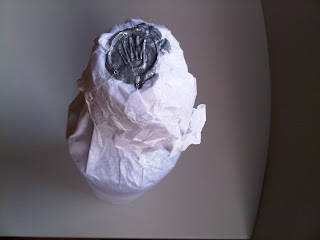
- and getting a pile of orders out by the end of the day (a Friday) so he could 'relax' at the Hurlingham Club on the weekend. Nigel's wines wrapped and sealed:

and hey presto:
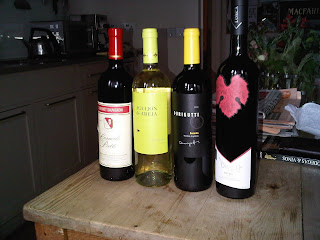
Torrontes: Aguijon de Abeja 2009, Lujan de Cuyo, Mendoza, 13.7%

Cabernet Sauvignon: Carmelo Patti 2003, Lujan de Cuyo, Mendoza, 14%

Malbec: Opalo 2008, Valle de Uco, 14% (“no usamos madera” – unwooded).

Bonarda: Durigutti 2008, Mendoza, 13.5% (“neither cold stabilised, filtered or fined”)

We look forward to these especially the Durigutti whose Malbec was the standout wine at a tasting organised by Anuva Wines – a very ‘gemütlich’ small-scale event which nonetheless managed to present 4 varieties in a flight of 5 wines and represent various regions as well.

For anyone wanting to make sense out of Argentinean wine though, Tollerman's the man. He will even ship to you anywhere in the world served by DHL if you like. www.0800-vino.com